Home / Articles
Signs Your Cataract Lens Implant Is Failing
Home / Articles
Signs Your Cataract Lens Implant Is Failing
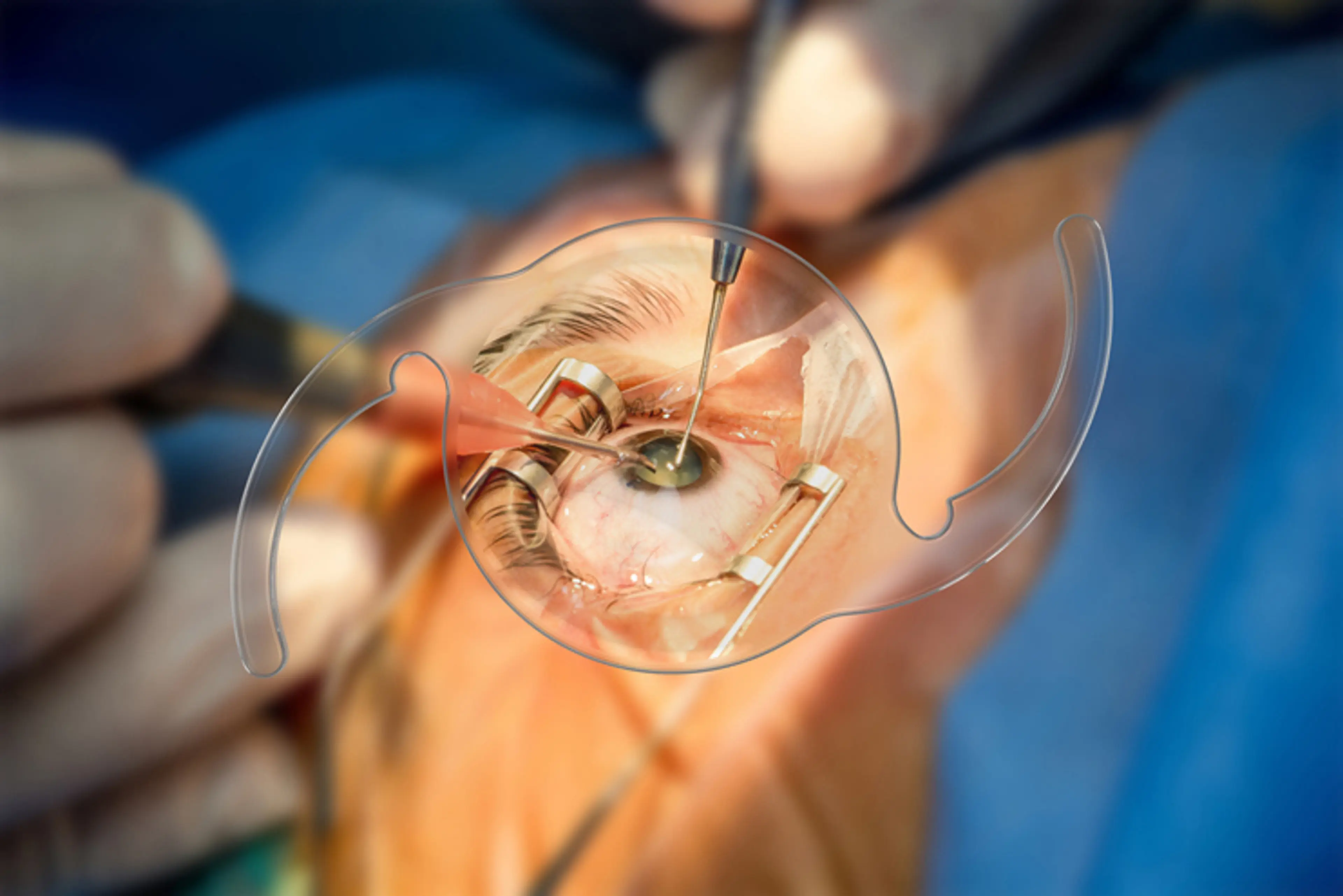
If you’ve undergone cataract surgery, you probably remember the relief and joy of seeing the world more clearly again. Replacing the clouded natural lens with an artificial intraocular lens (IOL) is one of the most successful procedures in modern medicine. At Jryn Eye Clinic in Busan, we see firsthand the transformative power of this surgery every day. But what many patients don’t realize is that even years after a successful cataract operation, vision can deteriorate again. And sometimes, the issue lies with the implant itself.
So what does it mean when we say a cataract lens implant is "failing"? What are the symptoms, why do they occur, and how can they be treated? This guide draws on our clinical experience and offers practical insight for patients navigating the uncertain territory of post-cataract vision problems. Whether you had your surgery locally or abroad, understanding the red flags and knowing when to seek help could protect your vision for years to come.
To start, the phrase "lens implant failure" is a little misleading. The IOL itself often remains structurally sound. What usually changes is the stability, positioning, clarity, or compatibility of the lens with the rest of the eye. At Jryn Eye Clinic, we've managed cases where the lens was:
Dislocated or shifted from its original position (subluxation)
Obscured by a secondary clouding of the lens capsule (posterior capsule opacification or PCO)
A poor optical match for the patient’s eye, causing blurred or distorted vision
Compromised by inflammation, trauma, or age-related degeneration of surrounding tissues
In all these cases, the end result is the same: the patient’s vision no longer meets expectations, and symptoms begin to emerge. These issues are not always immediate. Some patients report problems five, even ten years after their original cataract procedure. That's why long-term follow-up and self-awareness are crucial parts of post-surgical eye health.
From our clinic’s perspective, the most common red flags of a failing or problematic IOL include:
This is the most frequent complaint. The cause may be posterior capsule opacification, where a cloudy film forms behind the lens implant. It mimics cataract symptoms and is highly treatable with a laser procedure.
If you suddenly notice halos around lights or unusual glare at night, this might suggest the lens has shifted or is no longer centered. It can also indicate capsular opacification or surface imperfections affecting light passage. Patients often describe it as a "milky" or "hazy" ring around lights, especially when driving at night.
Double vision that persists with one eye closed could mean the lens is off-axis, or that another structural problem is causing image distortion. This can feel unsettling, especially if it arises suddenly in someone who previously had sharp vision.
Patients sometimes describe a strange feeling of instability inside the eye. While subtle, it could point to zonular weakness or a partially dislocated IOL. This can occur due to natural weakening of the capsule over time, or due to trauma such as a fall or eye rubbing.
If your glasses suddenly stop working or your prescription changes drastically within a short period, it could indicate that the lens implant has moved or that refractive error was not fully corrected by the original IOL. At Jryn Eye Clinic, we frequently compare current refraction results with your surgical history to pinpoint such shifts.
While rare, a failing lens implant can cause irritation if the surrounding tissues react to its presence. Postoperative inflammation or complications like uveitis can also compromise lens function. Pain is a late-stage sign and warrants immediate attention.
A number of factors contribute to IOL-related issues, even years after a successful cataract procedure:
Even with a well-placed lens, the aging eye continues to evolve. The capsule that holds the lens can shrink, contract, or become cloudy. Conditions like pseudoexfoliation syndrome can accelerate these changes.
Zonules are tiny ligaments that support the lens capsule. If they deteriorate due to conditions like pseudoexfoliation syndrome or trauma, the lens can become unstable. Some patients are born with weak zonules, and the issue may not become evident until years after surgery.
PCO occurs when residual lens epithelial cells grow over the capsule, scattering light and reducing clarity. It is the most common delayed complication of cataract surgery. Thankfully, it is also one of the easiest to treat with a quick, painless laser procedure.
In some cases, pre-operative measurements may not fully predict how the eye will heal or adapt. This can result in lingering refractive errors. Some eyes also experience anatomical changes post-surgery, which may shift the position of an otherwise well-chosen IOL.
Later interventions for glaucoma, retinal conditions, or injuries can disrupt the lens position or the capsule's integrity. Even vigorous rubbing or high-impact sports can cause an otherwise stable lens to shift over time.
Although rare, certain early-generation lenses or poorly manufactured IOLs may degrade over time. This is unusual with modern lenses but remains a possibility in select cases.
Our team at Jryn Eye Clinic takes a comprehensive approach to any post-cataract complaints. The process includes:
In complex cases, we collaborate with retina specialists or anterior segment surgeons to plan appropriate intervention. Our strength lies in coordination, precision diagnostics, and a deep respect for the individuality of each eye.
Once we identify the underlying cause, treatment is usually straightforward and effective:
A YAG laser capsulotomy clears the film in a quick outpatient procedure. Vision often improves immediately. This is one of the most common procedures we perform for post-cataract patients.
If the lens has shifted, surgical repositioning or replacement may be needed. At Jryn, we use the latest techniques and suturing methods to restore lens stability safely. We consider the patient’s age, lifestyle, and visual needs when planning these procedures.
If the IOL power is inadequate, options include corrective lenses, corneal refractive surgery, or IOL exchange depending on the severity. Custom solutions, like toric lens replacements or piggyback lenses, are also considered.
These are treated with anti-inflammatory drops or, if needed, more intensive immune modulation therapies. A prompt response is crucial to prevent long-term damage.
If no structural issues are found, we evaluate for other causes such as macular degeneration, glaucoma, or optic nerve damage.
Don’t ignore subtle vision changes. If you notice any of the following, book an exam promptly:
Increasing blur or foggy vision
Unusual glare, halos, or light sensitivity
New-onset double vision
Seeing shadows or the edge of the lens
Redness or eye discomfort that persists
The earlier we evaluate the issue, the better the outcome. Delaying could mean more invasive treatment later. You don't need to wait for vision to become "bad enough."
Located in Busanjin-gu, Busan, Jryn Eye Clinic is known for handling both routine and complex cases with precision. Dr. Han Sang Yeop, our lead ophthalmologist, brings over two decades of experience in cataract and refractive surgery. Patients come to us for a reason: we use advanced diagnostic tools, treat each case with personal attention, and follow through with long-term care.
Our facility is equipped with the latest tools including high-resolution OCT, corneal topography, and femtosecond laser-assisted surgical systems. But more than technology, we bring patient-focused clarity: our goal is to ensure you understand what’s happening inside your eye, and what we can do about it, together.
A lens implant is meant to last, but your eye is a living organ, constantly adapting. If something changes in your vision, trust your instincts. It may be a minor issue like capsule clouding, or it could be a sign that the lens has shifted or your eye’s structure has changed.
Either way, we’re here to help. At Jryn Eye Clinic, we see your lens not as a static piece of plastic, but as part of a dynamic, living system that requires attention and respect. We believe in long-term partnerships: not just surgery, but aftercare, follow-up, and clarity for years to come.
If you're experiencing any symptoms discussed here, don’t wait. Your vision is worth protecting. Book a personalized consultation with us, and let’s make sure your eyes are as clear as the day you walked out of cataract surgery. The road to clear, stable vision is still open — and we’ll walk it with you, every step of the way.